

OKenawa
The Programme OKenawa. Personalization. Alexander Technique. OKenawa® and martial arts.
The OKenawa programme
OKenawa® is inspired by martial arts and the Alexander Technique
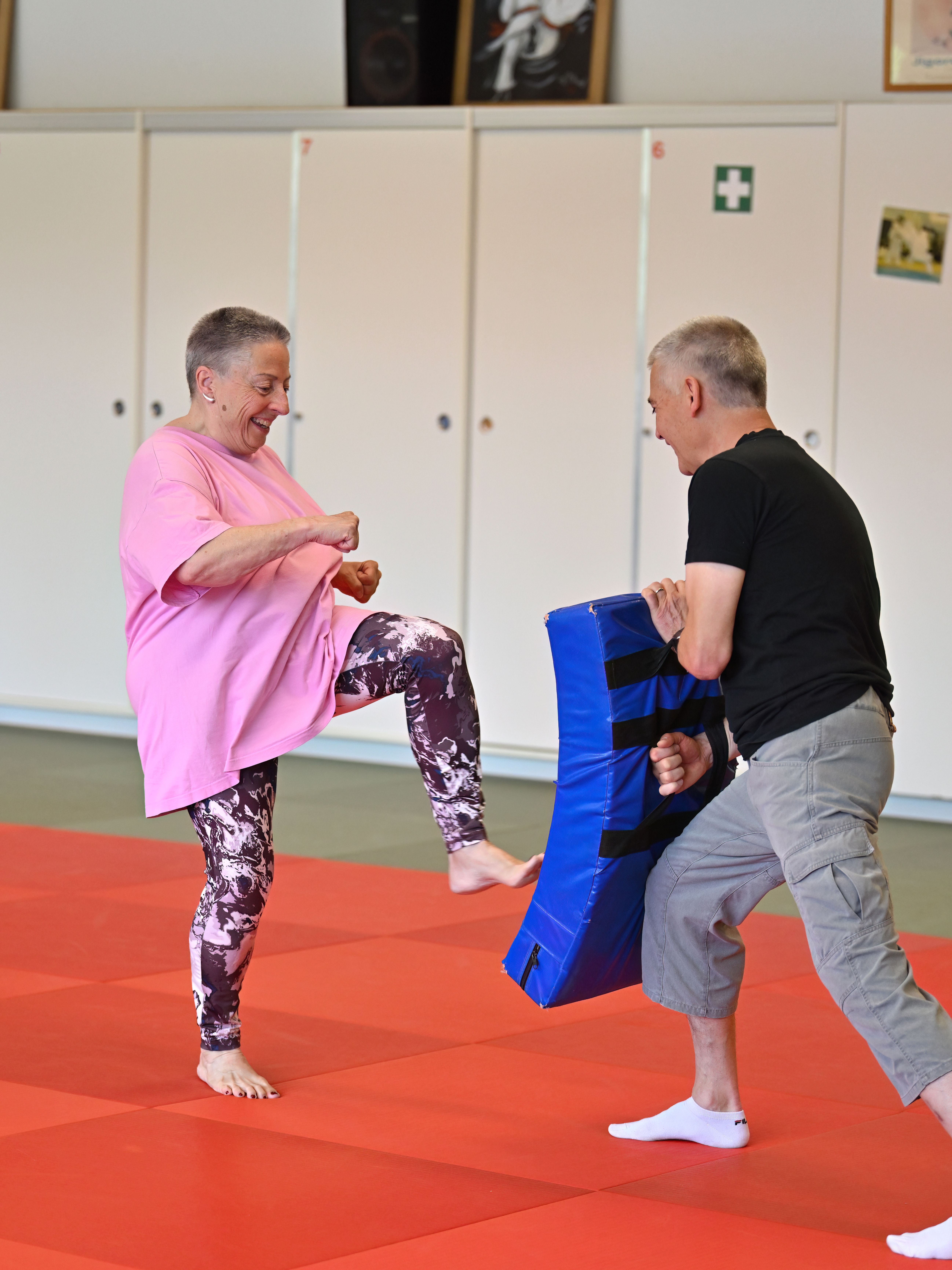
OKenawa® offers a physical activity low impact inspired by martial arts, in close collaboration with specialized medical and biological follow-up, ensuring continuity of hospital care (medical, physiotherapy, occupational therapy, etc.). The use of the Alexander Technique helps improve body alignment and posture, release unnecessary tensions, coordination, and fluidity of movement.
The return to movement takes into account each participant and optimally combines medical, sports, and scientific approaches.
This type of approach significantly and objectively improves balance, coordination, rhythm, mobility, and strength.
Practical consequences:
Bone strengthening measurable
Reduction of falls
Reduction of fractures and hospitalizations
Rediscovered pleasure of movement
Maintenance and improvement of autonomy
Resumption of projects, new social relationships
Improvement of quality of life
Personalization
The main obstacle to achieving significant results in people 50 years and older lies in consistency. To maximize engagement, it is essential to consider how each individual perceives and processes information.
Elements from the typologies of Jung, Myers-Briggs, and David Kersey will be integrated into the approach (Ref. Carlyn, M., 1977; Clack, G. B. et al., 2004).
Another approach, developed in the 90s by Bertrand Théraulaz and Ralph Hippolyte, links motor and cognitive preferences under the name Action Type®. This concept, proven among high-level athletes (basketball, golf, tennis, karate), will be addressed in the courses and explored further for those interested via ActionTypes Swiss Sarl (Ref. The Bible of Motor References, Amphora, 2021).
OKenawa® and martial arts
OKenawa® is inspired by slow and controlled martial arts (low impact), such as health karate and tai chi. These practices positively influence balance, coordination, rhythm, mobility, and strength, thus promoting:
Bone strengthening
The reduction of falls
The decrease in fractures
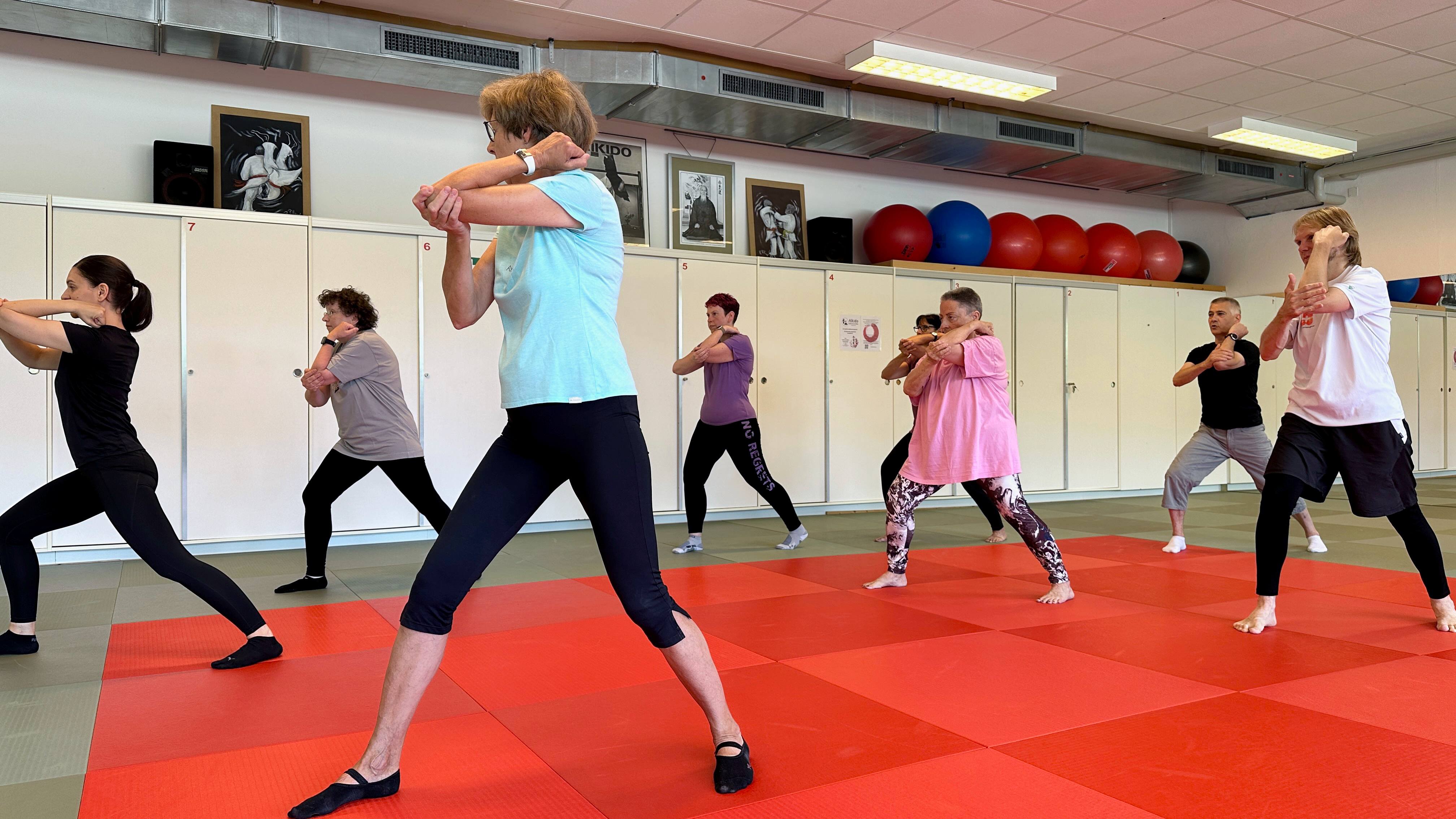
The method takes into account psychological and motor preferences of each patient, ensuring a training individualized and respectful. This approach improves adherence to training, efficiency and enjoyment of the practice, whether individual (personal goals) or group (common goals).
A significant reduction in injuries.
This approach enhances self-esteem and confidence, leading to optimal performance and attendance. The exercise program (type, intensity, frequency) is adapted to the preferences and limitations of each patient.
References:
Hars, M. et al., Long-term exercise in older adults: 4-year outcomes of music-based multitask training, Calcif. Tissue Int. (2014).
Wolf, S. L. et al., Reducing frailty and falls in older persons, J Am Geriatr Soc (1996).
Chow, T. H. et al., Effect of Chinese martial arts Tai Chi Chuan on osteoporosis prevention, J Orthop Translat (2018).
Zou, L. et al., Effect of Tai Chi on bone mineral density loss, Int J Environ Res Public Health (2017).
Zhang, Y. et al., Tai chi for treating osteopenia and osteoporosis, Clin Interv Aging (2019).
F.M. ALEXANDER, The Use of the Self, London, 1932 ; L'Usage de Soi (trans. by E. Lefebvre), Brussels, Contredanse, 1996.
F.M. ALEXANDER, Constructive Conscious Control of the Individual, London, (Methuen & Co, 1923), V. Gollancz, 1992.
W. CARRINGTON, Thinking aloud. Talks on teaching the Alexander Technique (ed. by Jerry Sontag), San Francisco, Mornum Time Press, 1994.