

OKenawa
Physical activity for health. Lifestyle and prevention. Motivation and regularity.
OKenawa® and physical activity
Physical activity for health
The importance of sports practice for the elderly population has only recently been recognized, especially for patients with Alzheimer's disease, Parkinson's disease, and osteoporosis.
In the latter condition, studies show that bone mass, bone architecture, and bone mineral density (BMD) are improved by repeated mechanical stimuli. Physical training programs have also proven beneficial for:
Reducing pain
Improving physical condition
Providing psychological benefits
Stimulating cognitive functions
Several options exist in addition to medical treatments. In particular, movement is generally recommended for people diagnosed with osteoporosis.
However, these benefits strongly depend on the exercise protocol and the rate of regularity. Osteoporotic patients should practice at least 90 minutes of exercise per week (ideally 3 to 4 sessions of 30 minutes). This helps to reduce the risk of falling, improve balance and mobility.
Lifestyle and prevention
Lifestyle changes can also limit the negative impact on bones, such as:
Reducing caffeine consumption
Adequate protein intake
No tobacco and excessive alcohol
Physical activity also has a beneficial effect on bone mineral density (BMD), that is, the amount of calcium in the bone expressed in grams per square centimeter. The lower the density, the higher the risk of fracture is.
The OKenawa® approach
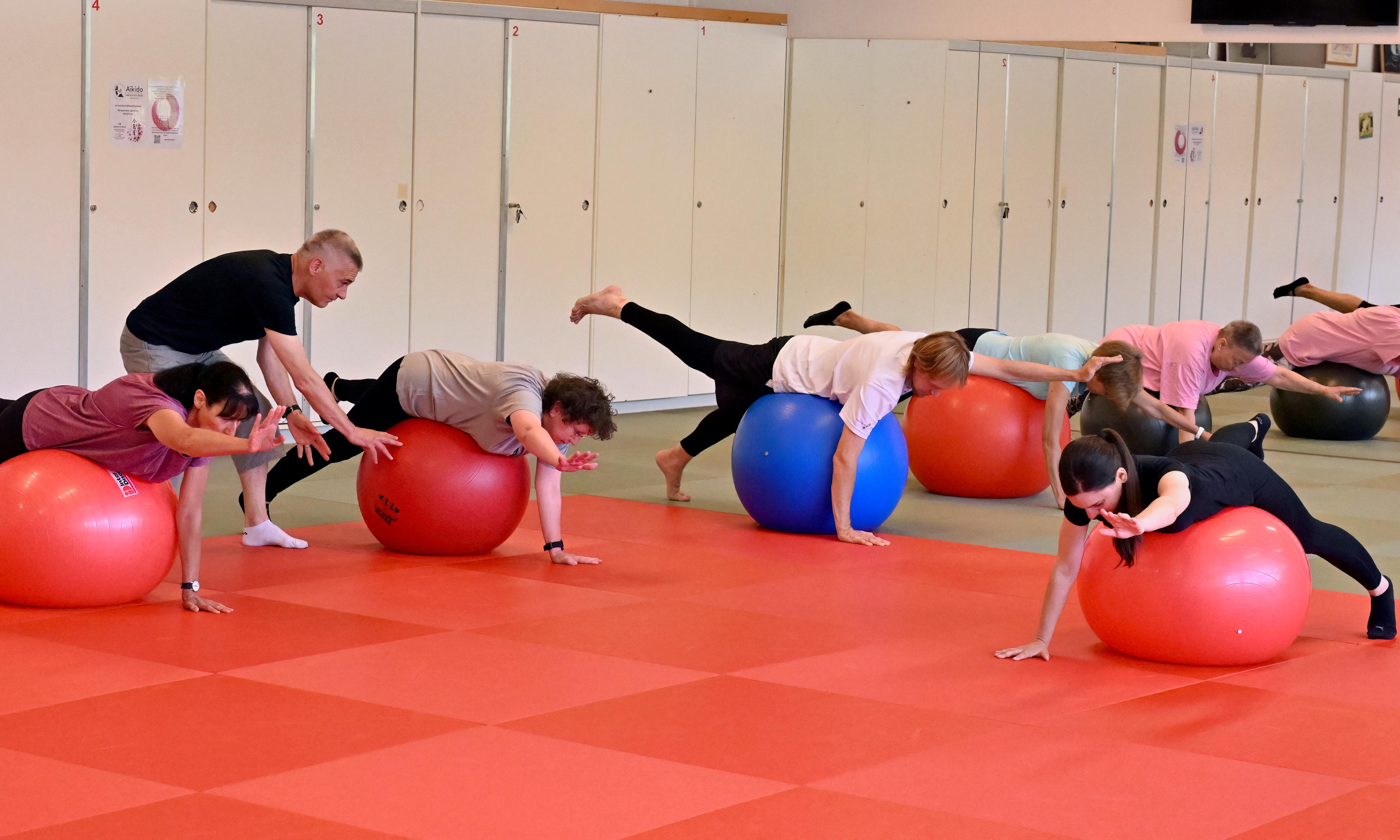
Exercises involving mechanical load (compression, deformation, shear) positively influence bone mineralization. This results in an increase in bone mass and density, making the bones stronger.
Motivation and regularity
Adhering to an exercise program is often a challenge, especially for elderly people. Different strategies have been implemented to improve training perseverance. For example:
A multitask program based on rhythm and music has increased long-term adherence (Trombetti A et al., 2011).
A study from 1996 demonstrated that 15 weeks of Tai chi led to better perseverance, reduced the risk of falling by 47%, and decreased the fear of failing (Wolf et al., J Am Geriatr Soc 44;489-96).
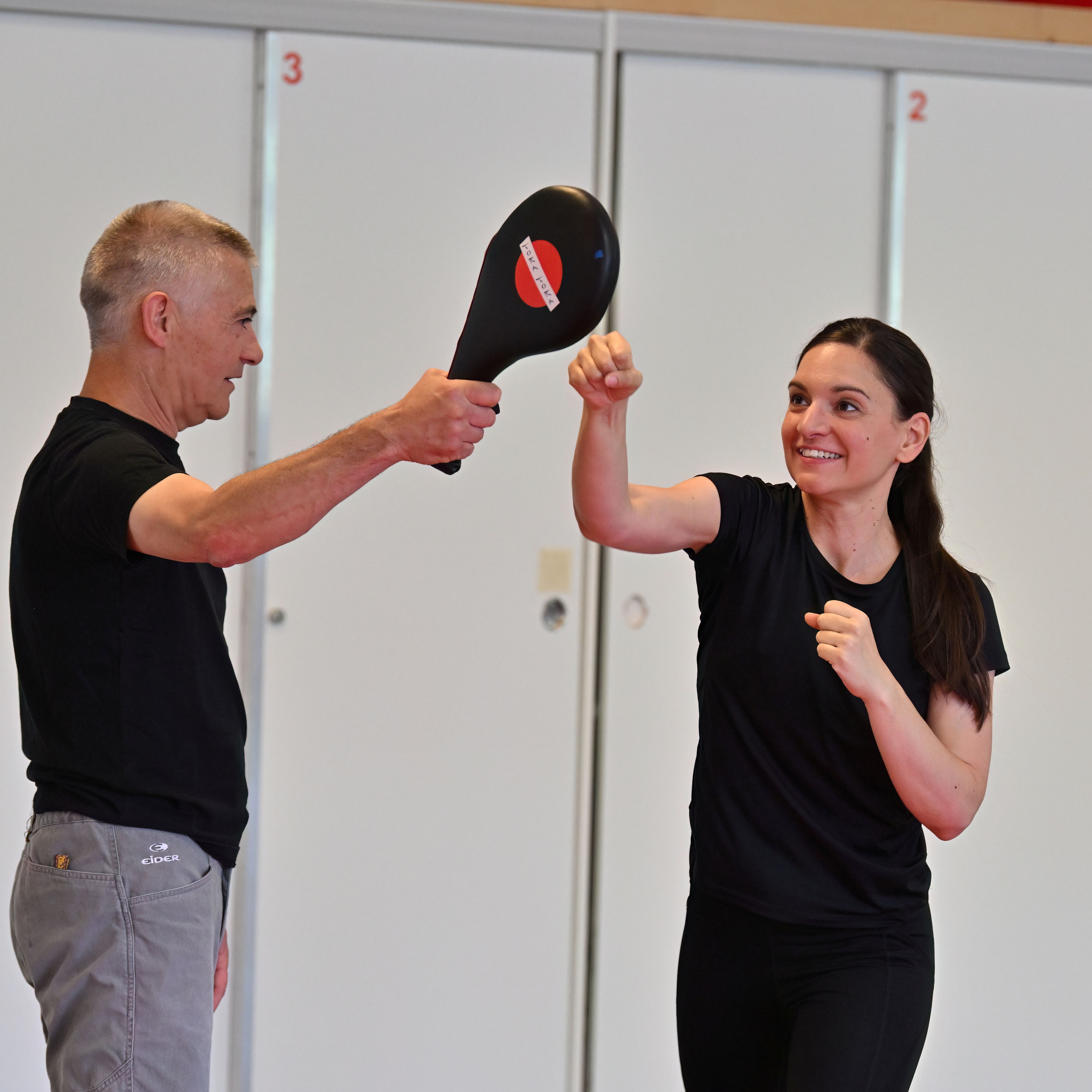
The OKenawa® approach aims to strengthen self-confidence to ensure optimal program adherence. The goal is to adapt specifically :
The type of martial exercises low impact
The intensity of the sessions
The frequency of training
These adaptations are made in collaboration with medical and sports specialists such as Prof J. Dudler, Dr D. Bruelhart and Dr J. Lecoultre, V. and C. De Vido and G. Leto.